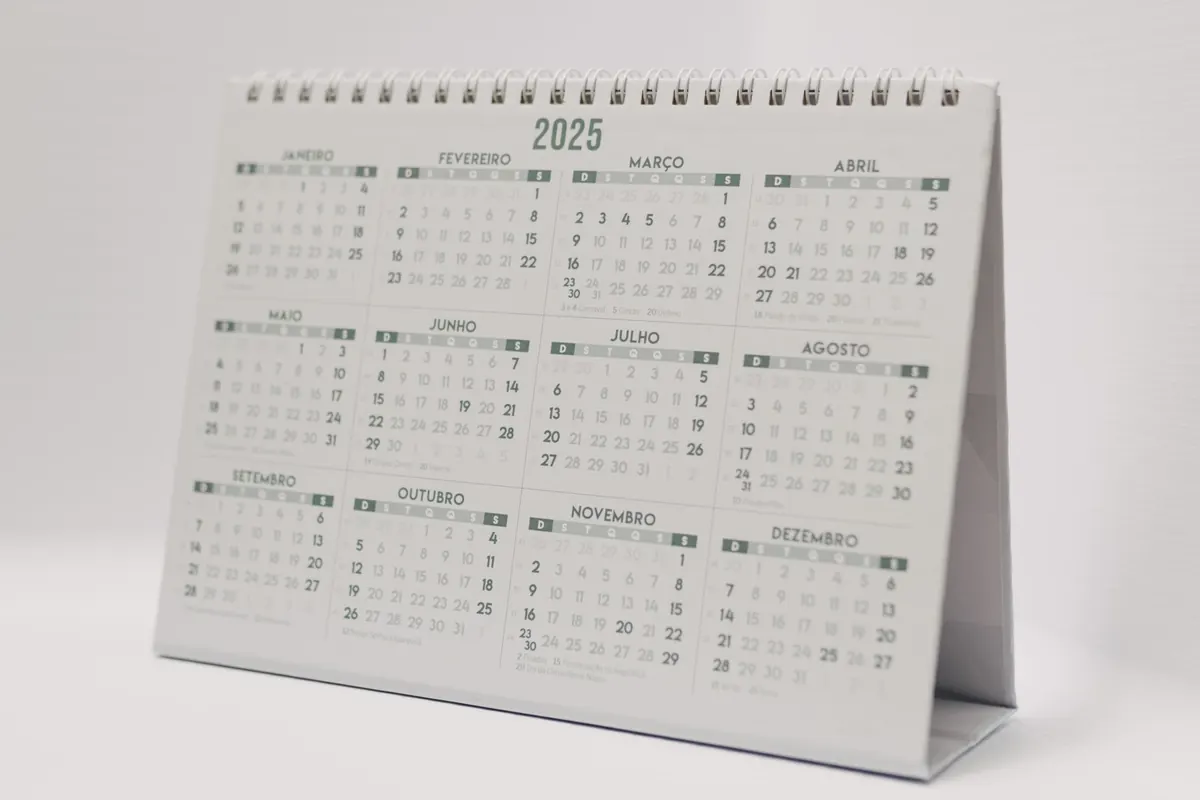
Every January, plenty of UK writers resolve to enter more competitions. By spring, most have missed two or three deadlines they genuinely meant to hit. The writing wasn't the problem; the timing was. Competitions open and close on their own schedules, often months before you'd think to look, and the ones worth entering tend to cluster in the same few weeks. A calendar built once and checked monthly will do more for your submission record than any burst of enthusiasm.
Most competition entries fail on logistics rather than quality. A story needs a final edit, a proofread, a clean file with the right word count and an anonymised header if the rules demand one. That is an evening's work, not a ten-minute job — and it is exactly the work that gets skipped when a deadline lands tomorrow.
There is also the money. Entry fees are usually modest, but six or seven across a year add up, and paying them all in one month is miserable. Spreading submissions across twelve months keeps the cost steady and gives each piece a proper chance. Above all, a calendar stops you writing in a panic for a prize you don't actually suit, and helps you aim at the ones you do.
Spring is the busiest stretch for fiction. The Bath Novel Award, for unagented and unpublished novelists, usually closes in the spring, alongside its companion award for children's fiction. The Bath Short Story Award and the Bristol Short Story Prize sit close together in the same window, which is handy if you have one strong story and two versions of a shortlist.
February belongs to the Northern Writers' Awards, run by New Writing North. Entry is free, and the awards are open to writers living in the north of England, with categories covering fiction, poetry, children's writing and more. It is one of the best-value deadlines in the UK calendar, and it rewards early drafting rather than last-minute scrambling.
Later in spring, the Bridport Prize closes its four categories — short story, flash fiction, poetry and novel opening — usually towards the end of May. Bridport is a serious entry, so give it a serious draft. Spring is also when development programmes such as the London Library Emerging Writers Programme tend to open, and when many magazines read for their autumn issues.
Summer is quieter for big prizes, which makes it ideal for the work that doesn't fit a deadline: assembling a pamphlet, redrafting a novel, or preparing a collection to send to publishers. Publisher-submitted prizes such as the Forward Prizes and the T.S. Eliot Prize operate on a different cycle, decided by your publisher's schedule rather than yours, but they are worth understanding if a collection is on the horizon. Poetry competitions run by the Royal Society of Literature and by long-standing literary magazines also tend to close between June and August.
Use the lull for the unglamorous jobs: keeping a clean master copy of every piece, checking word counts, and writing the short synopsis or author bio that so many entries ask for at the last minute.
Two dates anchor the autumn. The Poetry Society's National Poetry Competition has long closed on 31 October, and it remains one of the few UK prizes open to both new and established poets on equal terms. The Commonwealth Short Story Prize, free to enter for writers from Commonwealth countries including the UK, also falls in this window.
The Manchester Writing Competition, with separate fiction and poetry prizes, typically closes in the autumn as well. Add in flash fiction prizes from independent presses and the reading windows for next year's anthologies, and October can carry five deadlines at once. Plan for it in September rather than discovering it on the day.
Winter is grant season as much as competition season. In England, National Lottery Project Grants from Arts Council England are open for much of the year, and the Developing Your Creative Practice fund runs in rounds for individual writers who want to buy time, training or research. Creative Scotland, Literature Wales and the Arts Council of Northern Ireland run comparable schemes for writers in those nations. The Society of Authors and its Authors' Foundation also award grants to writers with a work in progress, with deadlines published on their site.
Grants reward clarity, not need alone. A convincing application sets out what you will make, when, and what it will cost, with a budget that adds up and a realistic timeline. Apply well before the money is urgent, keep records of everything you spend, and check the current guidance each round — schemes change more often than prizes do. If an award affects your tax position or your self-employed status, take proper professional advice.
Competitions are won and lost in the rules. Before you pay a fee, check:
Keep every confirmation email in one folder. When a result is late, that folder is your proof of entry.
A calendar you actually use takes about an hour to set up. Try this:
Dates shift, prizes occasionally pause, and new ones appear, so confirm every deadline on the organiser's own page before you build your plan around it. Then start with the next one on the list, and give it the draft it deserves.
Photo: Matheus Bertelli / Pexels

A practical guide to UK freelance writing invoices: what to include, how to set payment terms, and how to chase late...

Editing your own writing is easier with a method. This guide walks beginners through structural, paragraph and...

Thirty atmospheric autumn writing prompts for poems, stories and essays, plus practical advice on using them to get...

A hub for writers and writing inspiration..
